Do you know Spain only for the sun, paella, and beaches?
What if I told you this country hides realities that shatter those clichés? If you discover them, you will enjoy your adventure like a true local.
Spain is much more than its stereotypes. It is a land of contrasts, with a dense history and a vibrant rhythm of life that is unique in Europe.
Get ready, because we are going to reveal 15 curious facts about Spain that will surprise you and prove incredibly useful on your next visit.
A quick journey through 15 Spanish facts and customs
We have curated 15 curiosities and customs of Spain, ranging from gastronomy and schedules to culture, so you can understand the essence of the country in just a few minutes.
1. It’s not just “Spanish”—there are 4 other languages
Although Castilian (or Spanish) is the official language nationwide, it is not the only one. Four other co-official languages coexist in their respective regions.
We are talking about Catalan (in Catalonia and the Balearic Islands), Galician (in Galicia), Basque (in the Basque Country and part of Navarre), and Aranese (in the Aran Valley).
2. Meal schedules follow a different rhythm
If you try to grab lunch at 12:00 PM, you will find the kitchens closed. In Spain, the culinary clock is different: lunch rarely begins before 2:00 PM (between 2:30 PM and 3:00 PM is the norm).
Dinner follows the same logic and does not start before 9:00 PM. In fact, dining at 10:00 PM is perfectly normal, especially in the summer.
3. The “sobremesa” is sacred
Just as important as the meal itself is what happens afterward. The sobremesa is that wonderful custom of lingering at the table to chat after dessert, with a coffee or liqueur, without any rush to get up.
It is a fundamental social act for Spaniards, especially during weekend meals.
4. The siesta doesn’t mean everyone is sleeping
The myth that all of Spain shuts down to nap is false. The truth is that, particularly in smaller cities and during summer, many businesses close at midday (approx. from 2:00 PM to 5:00 PM).
This isn’t necessarily for sleeping, but to eat quietly at home and avoid the hours of most intense heat.
5. The 12 grapes of New Year’s Eve
The most famous Christmas tradition is eating 12 grapes on New Year’s Eve, one for each chime of the clock at midnight.
Legend says that if you manage to eat them all on time without choking, you will have a year of good luck. We warn you—it is harder than it looks!
6. Spain is the world leader in olive oil
Although Italy has the fame, Spain is the world’s largest producer of olive oil by far. “Liquid gold” is the absolute foundation of our diet.
You will find a bottle of extra virgin olive oil (EVOO) presiding over almost every table, from the most luxurious restaurant to the humblest tavern.
7. The most popular breakfast is with tomato
Forget about scrambled eggs. The quintessential Spanish breakfast is toast with tomato.
It consists of toasted bread, lightly rubbed with garlic (optional), drizzled with good oil, and topped with crushed natural tomato and a pinch of salt. Simple, incredibly healthy, and delicious.
8. They have the only “official” desert in Europe
The Tabernas Desert in Almería (Andalucía) is considered the only proper desert on the European continent.
Its arid landscapes were the setting for hundreds of western movies (the famous Spaghetti Westerns) in the 60s and 70s.
9. There are festivals where throwing food is legal
Spain is famous for its popular festivals, and some are quite peculiar. The most well-known is “La Tomatina” in Buñol, where thousands of people throw tons of tomatoes at each other.
Less known, but just as intense, is the Wine Battle of Haro, in La Rioja, where attendees end up literally bathed in red wine.
10. Ordering tapas is an art (tapa vs. ración)
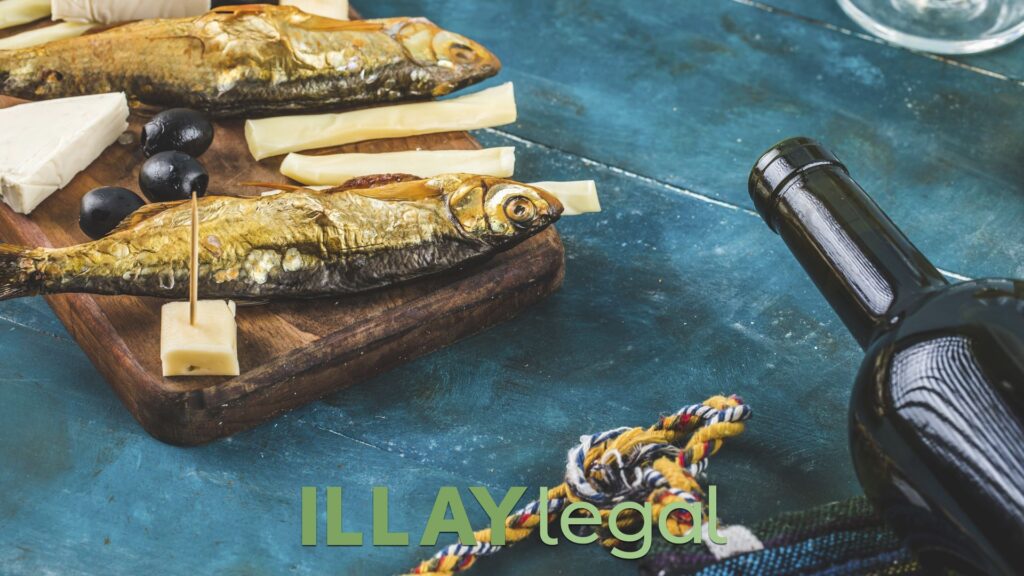
Distinguishing concepts is key. A “tapa” is a small portion of food (sometimes free with a drink, especially in the south). A “pincho” is similar but usually comes on bread and is skewered with a toothpick (typical of the north).
On the other hand, a “ración” is a full plate, designed to be shared in the center of the table among several diners.
11. Tipping is not mandatory
Unlike in other countries, tipping in Spain is not a strict obligation, as service is included.
However, if the service has been good, it is common to leave a few coins or round up the bill (called “el bote”). It is appreciated, but no one will look at you badly if you don’t do it.
12. Tap water is excellent (and free)
A golden tip: tap water is potable and of high quality in the vast majority of the territory (especially in Madrid).
Furthermore, by law, bars and restaurants are obliged to offer you a glass of tap water for free if you ask for it, so do not hesitate to ask.
13. The word “vale” works for everything
If there is one word you need to learn, it is “vale” (pronounced bah-leh). It means “OK,” “agreed,” “perfect,” “understood,” or “that works.”
Spaniards use it for everything, constantly. It is, without a doubt, the most useful wildcard in the vocabulary.
14. A giant of World Heritage
Spain competes for the world podium (alongside Italy and China) for the number of sites declared World Heritage by UNESCO.
From the Alhambra in Granada and the Sagrada Familia to entire cities or cave paintings, the historical wealth treasured by the country is overwhelming.
15. No, it’s not all flamenco and bulls
This is one of the most widespread stereotypes. Flamenco is a sublime art, but its roots are in Andalusia and it is not traditional across the entire country. Bullfights are a controversial tradition with fewer and fewer followers, especially among new generations.
Are you ready for your next adventure in Spain?
These 15 curious facts about Spain are just the tip of the iceberg of an incredibly diverse, complex, and welcoming country.
Knowing these details, from when to eat dinner to understanding the magic of a sobremesa, is the best tool to connect with people and enjoy your trip authentically.
Thank you for reading. If you liked this journey through Spanish culture, we invite you to keep exploring our blog. You will find more practical guides and tips to understand the world around you.
Frequently Asked Questions
We answer the most frequently asked questions about interesting facts about culture and life in Spain.
Which curiosities about Spain are most surprising?
Undoubtedly, what impacts visitors the most are the schedules (lunch at 3:00 PM and dinner at 10:00 PM) and the intense life on the streets.
It is surprising to see terraces full until late, even on weekdays, and the custom of the free tapa with a drink in cities like Granada or León is a marvel.
What etiquette rules should be respected in bars?
The main thing is politeness. Do not call the waiter by snapping your fingers; raise your hand or make eye contact. Always ask with “please” (por favor) and say “thank you” (gracias).
In tapas bars, the atmosphere is informal: ordering at the bar is normal and there may be noise; the hustle and bustle is part of the Spanish charm.
When is the best time to go to popular festivals?
The major festivals (Fallas, April Fair, San Fermín) tend to be overcrowded. To experience them better, avoid the peak days or weekends.
If you are looking for something more genuine, the summer (June to September) is full of patron saint festivals in the villages. These are the famous “verbenas,” which are much more authentic and fun.
How can I move between cities cheaply?
Spain has an excellent high-speed train network (AVE, Iryo, Ouigo) to connect major capitals. If you book in advance, prices are very competitive.
For short trips or villages, the bus (ALSA and other companies) is the most economical option and reaches every corner.
What typical dishes must I try?
Beyond paella, the potato omelet (tortilla de patatas) is the national staple. You must try Iberian acorn-fed ham, a good gazpacho or salmorejo in summer, and Galician-style octopus.
If you travel to the north, going out for “pinchos” in the Basque Country is a mandatory gastronomic experience.